Meet Our Founder, Yuan
Combining clinical expertise with personal experience to deliver transformative results

Bachelor in Nutrition & Dietetics, Monash University
10+ Years Clinical Experience
Evidence-Based Practice Specialist
Personal PCOS & Endometriosis Journey
Feng-Yuan Liu
Dietitian, Coach & CEO
With a Bachelor degree in Nutrition and Dietetics from Monash University and over 10 years of clinical experience as a dietitian, Yuan is an expert in human nutrition.
However, her expertise isn’t just from clinical experience, but also from personal experience.
Yuan developed PCOS in her teens and also went on to have endometriosis, which was diagnosed in her 20s.
She tried everything to deal with the pain, the central weight gain and the exhaustion that came with the PCOS and endometriosis, made worse by the stress from owning and operating a half million dollar company.
Through these experiences, Yuan realised that conventional wisdom just wasn’t cutting it. Her energy levels were low, her brain was foggy and everything just felt harder than it should be. This forced her to reassess her knowledge, practice and beliefs around nutrition, and how she could use it to improve energy and peak performance as a business owner.
Yuan was able to, through nutrition, reverse her own PCOS and get her previously serious and rampant endometriosis under control. After 6 surgeries to remove cysts and endo over a 10 year span, her doctors were convinced that natural conception was not possible. However, Yuan beat the odds and last year in 2019 and gave birth to a naturally conceived baby girl, Charli, and again in 2023 with her second baby girl, Stevie.
For her clients, Yuan utilises bleeding-edge research to help them achieve hormonal and metabolic optimization. She believes that nutritional science is a rapidly progressive science, and following guidelines just will not allow her clients to receive the best quality care that is available.
Her passion in nutrition and thirst for being the best and helping her clients be at their best led her to becoming a world renowned dietitian and coach for small business owners striving towards peak performance.
To apply to work with Yuan, please reach out to us via email at [email protected]
Latest Insights
Evidence-based strategies and real-world advice for entrepreneurial health
5 Things You Should Know About Your Weight
Today marks the start of Metro Dietetics’ ‘Weight Awareness Month’ – a perfect time to write a piece about weight. I’m hoping this will inform you about the perception and misconceptions about weight, and why losing/gaining ‘weight’ could be the wrong measure to focus your attention on.
The numbers on the scales don’t tell you enough
Don’t focus all your energy and attention on the number of kilograms you weigh and set goals purely around your weight. Weighing yourself is not the most useful way to measure the type of body you have and the amount of ‘fat’ you want to lose.
You can easily fluctuate day to day depending on the time you weigh yourself, whether you have gone to the toilet and emptied your bowels, how much water and food you’ve had that day, and so forth.
You may find that you weigh the same, but look and feel very different (see point 3).
BMI’s are misleading (don’t use it to determine your ‘healthy’ weight…ever!)
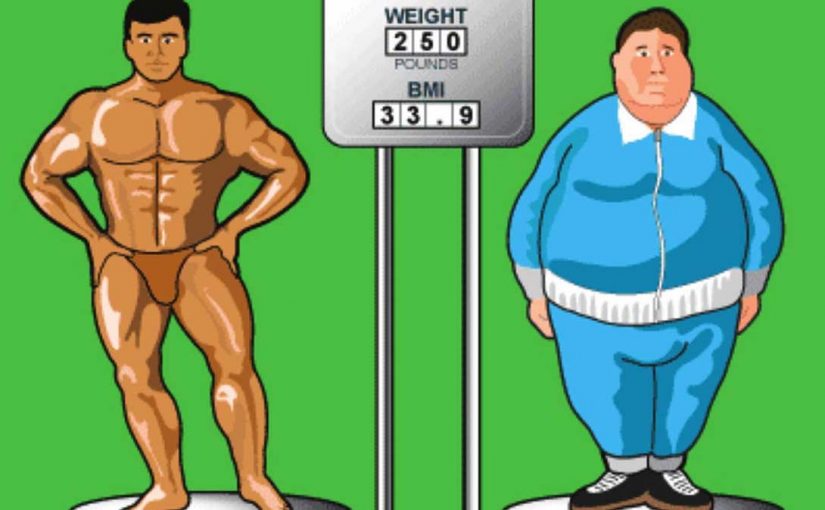
I’m sure you’ve all heard of the illusive term ‘BMI.’ BMI (Body Mass Index) is a measurement used to classify weight, being: underweight, healthy weight, overweight and obese. This is calculated by taking your weight and dividing it by your height to the power of 2 (kg/m2). BMI measurements can be useful when looking at population level data, but for an individual, this measurement is a lot less valuable and actually quite misleading. It does not take into consideration: gender, age, ethnicity and mostly importantly, body composition.
The most obvious example of a misleading BMI would be a body builder – clearly very fit and muscular individuals. I typed in ‘body builder profile’ on Google, and found that a professional body builder (Jay Cutler) weighed 118kg during contest and was 1.77m tall. This gives him a BMI of 38kg/m2and classed him as ‘obese.’ Imagine how high the BMI would have been if Jay was actually shorter!
Your focus should be shifted towards lean body mass
For the same volume, lean body mass (or muscle mass) weighs a lot more than fat does. Another way to put it is: for the same weight, muscle mass is denser and occupies a smaller volume compared to fat mass.
What does this mean for those who are fixated on scale-weight loss? It means that you can be doing all the right things, increasing physical activity and eating healthier, but the number on the scales may not change. Please don’t be disheartened! It could very well be that your body composition is changing and you’re becoming leaner. Losing fat and gaining muscle does not show on the scales!
Take me as a case study: I have weighed approx. 59-61kg for the last 8 years or so. I play soccer 3 times a week during the year and have periods of travelling and significantly reduced physical activity levels during the off season. My eating habits have never changed drastically. My weight has only every fluctuated by 1-2kg, despite looking quite different in the mirror and feeling very different / not fitting into my clothes. The difference in these 2 photos is about 2kg. In the photo on the right, it’s clear that I have a lot more fat deposited around my gut, hips and thighs (or maybe it’s just a bad angle??). The fact is, even though I had only gained a little on the scales, my body composition had changed greatly to have less muscle and more fat – which makes me appear ‘fatter’ and a lot bigger in terms of clothing size.

Getting your skinfolds assessed by an ISAK Accredited Anthropometrist or having a DEXA scan is an accurate way to measure your body composition and to find out your ‘body fat percentage.’
Considering your body shape and where your deposit most of your fat is important
Research now suggests that individuals who store their fat around their belly are more likely to experience poorer health. As abdominal fat increases, so too does fat stored around your organs, causing inflammation and therefore having consequences on long-term health conditions such as type 2 diabetes, hypertension and dyslipidaemia. Measuring the size of your waist and aiming to reduce this could be a better goal for you and a better indication of improving health, than to focus purely on overall weight.
Weight should not be your only measurement of health
Obsessing over the number on the scales is not good for anyone! Whilst scale weight certainly can be used as an indicator for progress when weight loss is required, it should only be used as that – anindicator.
Other things you can focus on instead could be:
Decreasing your risk of long-term diseases
> Improving the quality of your diet
> Improving your fitness level
> Changing your body composition
> Improving mood and energy level
> Getting better quality sleep
> Fitting into your clothes better
> Losing centimeters around your waistline
So, rather than following the latest Diet Plan to lose “weight”, you would be doing yourself and your health a much bigger favour to pop in and see one of our Dietitians, Nutritionists or Exercise Physiologist to help you identify appropriate goals and work with you to create individualized and realistic strategies to achieving better health!